
 By
By 
With the energy costs in the UK climbing and the environmental concerns are front-of-mind, choosing sustainable rooflights (also called skylights or roof glazing) is becoming more important than ever.
Homeowners, architects, and renovators want the beauty of natural light. But don’t want the drawbacks of heat loss, condensation, or leaks.
In this blog, we’ll tell you more about why sustainability matters. The main types of rooflights. And how they support energy efficiency & daylighting, low-impact installation techniques, and ongoing maintenance for longevity.
By the end of this blog, you’ll see how the right choices can give you a bright, healthy, efficient space and peace of mind.
Why Sustainability Matters

Many people like us dream of sunlit rooms. But we are worried about the energy bills and water leakages. That’s where sustainable rooflights for flat roofs come into play. They can help reduce the heating, cooling, and lighting loads of the house.
With a properly designed rooflight system you can turn a liability like a hole in your roof into an asset. And not just any asset. An asset that helps regulate indoor climate, enhances occupant comfort, and cuts down electricity use significantly. But real sustainability demands more than fancy claims. It means:
- Thoughtful materials (recycled or low-carbon options)
- Usable certifications (e.g. Passive House, Cradle-to-Cradle)
- Glazing that balances light transmission with thermal control
Many homeowners on forums complain: “Skylights are awesome until they leak,” or “Most energy analyses show skylights are a net loser of energy.” The problem is often poor design or cheap materials. And not the idea of a rooflight itself.
When you choose conscientious products and install them well, you convert a potential problem into a sustainable opportunity.
Types of Rooflights
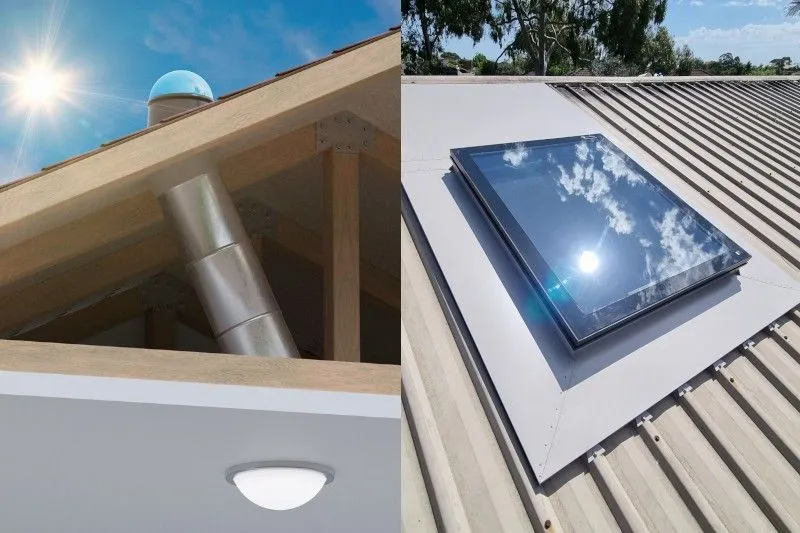
When choosing a rooflights for flat roofs for yourself. Your decision should align with function, aesthetics, and performance. The main categories include:
- Fixed (non-opening) rooflights: This is the simplest rooflight with no moving parts to fail, but reliant on passive strategies for ventilation.
- Ventilating or operable rooflights. This roof light allows hot air to escape and fresh air in, reducing mechanical cooling needs.
- Tubular or sun-tunnel lights. This one channels light through a reflective tube, with low impact on the thermal envelope.
- Roof lanterns / glass pyramids. These are dramatic and ideal for large spans, but they require rigorous thermal breaks and high-performance glazing.
When selecting, look for triple glazing, warm-edge spacers, low-E coatings, argon or krypton fills, and frames made from recycled aluminium or FSC-certified timber.
A ventilating triple-glazed rooflight is far more sustainable than a poorly made fixed double-glazed model. Also, keep your building’s orientation, sun path, shading, and internal loads in mind when picking the type.
Energy Efficiency & Daylighting

A rooflight’s sustainability is judged by its energy performance. Good rooflight for flat roofs get the maximum daylight with minimal heat gain or loss. This balance is because of:
- U-value (thermal transmittance): Try to aim below 1.5 W/m²K, ideally near or below 1.0 W/m²K
- Solar heat gain coefficient (SHGC). Tuned to your climate
- Visible light transmittance (VLT). This optimizes natural light
- Shading control. This prevents overheating.
Place rooflights to deliver uniform light rather than glare hot spots. Diffusing glass, frit patterns, micro-prisms, or integrated louvers can spread light evenly.
Low-Impact Installation

Even the most advanced materials won’t save you if installation is sloppy. A sustainable installation respects both the performance goals and the existing structure.
Start with proper flashing and waterproofing. Most leaks come from poor flashing transitions rather than the rooflight itself. Use step or pitched kerbs, drainage channels, and sealed membranes that tie into the roof system.
You can save yourself from structural disruptions by using prefabricated units that fit right with your roof geometry. This reduces onsite waste. Choose adhesives and sealants with low VOCs, and use corrosion-resistant fasteners properly torqued to avoid seal distortion.
Other techniques include:
- Stacked or stepped glazing units for built-in drainage
- Sloped installations to prevent water pooling
- Interior-side installation systems to reduce scaffolding needs
- Retrofitting with preservation of insulation and air barriers
Always tape and seal the interfaces, and include vapor control layers to prevent condensation in cold climates. A well-detailed installation ensures your sustainable materials deliver on promise. No leaks, no gaps, no regrets.
Even forum skeptics concede: “If the shaft is well insulated, the skylight is no more of an energy conservation problem than a window.” It’s the installation that keeps that promise true.
Maintenance for Longevity

Even the best sustainable rooflights must live long to justify its cost. Maintenance is your guardrail.
- Clean regularly with mild, pH-neutral cleaners to protect coatings.
- Inspect seals, gaskets, and flashing annually especially after storms.
- Watch for condensation between panes; it signals seal failure.
- Lubricate rooflight’s mechanisms.
- Replace any worn components to avoid failure later on.
Some manufacturers also design modular rooflights with replaceable glazing or upgrade options. This feature allows you to change the old low-E coatings with new ones. Or self-cleaning surfaces over time.
Conclusion
By choosing high-quality materials, selecting the right type, optimizing energy and daylighting balance, using low-impact installation methods, and committing to regular maintenance, you turn your rooflight into a long-term asset.









Comments