
 By
By 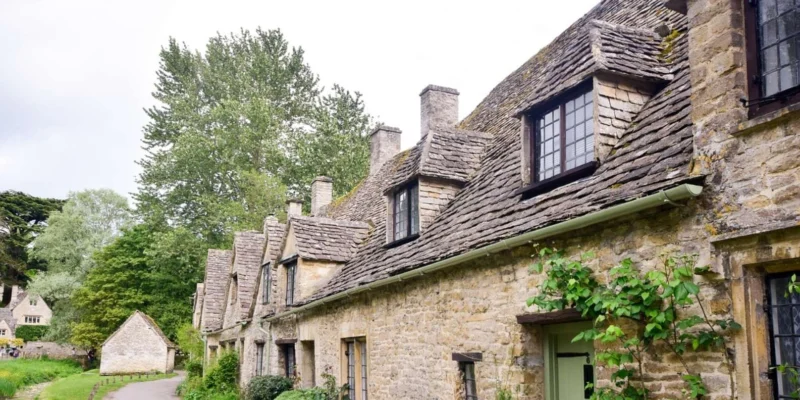
Most people visit the Cotswolds for the scenery. You drive through arched stone gateways into villages that look like someone built them specifically for a Sunday supplement. The buildings are beautiful. The pubs are cosy. The cream teas are exactly what you’d expect. But after a couple of trips, if you’re honest, the loop starts to feel familiar. Another market town, another antique shop, another photo of the same picturesque high street you’ve seen on a thousand Instagram feeds.
Historically, though, the Cotswolds has always been a place that makes things. Not just sells things. Makes them. And once you start looking for the makers instead of the gift shops, the whole region opens up differently.
Wool, Stone, and What Came Before the Gift Shops
The Cotswolds wasn’t always a tourist destination. For centuries, it was an industrial heartland, one of the wealthiest wool-producing regions in medieval England. Those honey-coloured buildings everyone photographs? They were funded by wool merchants, built by stonemasons, and fitted out by blacksmiths, carpenters, and leatherworkers. Every picture-perfect village was a working community, and the crafts that built them didn’t vanish overnight.
Some of them never left at all. They just became quieter, tucked into barns and workshops on the edges of towns where the tourist footfall doesn’t reach. The potters, the weavers, the blacksmiths, they’re still here, still making. They’ve just been drowned out by the cream tea economy.
There’s something worth saying about how a region’s identity can get flattened by tourism. The Cotswolds is marketed as a place to look at, which means people come to look and leave. But when you come to do something, to actually get your hands dirty, it becomes a completely different kind of visit.
Where the Cotswolds Makers Are
Stroud is a great place to start. The Saturday farmers’ market is objectively one of the best in the country (it’s won awards!), not in a quaint way, but in a proper, working way. Bakers, cheesemakers, cider producers, all selling directly. No middlemen, no gift wrapping.
But it’s the workshops around the town that make it worth planning a proper visit. Within half an hour’s drive of Stroud, you’ll find working potteries running day courses, textile studios where you can learn to weave on traditional looms, and cider makers in the Wye Valley who’ll let you press fruit and blend your own batches in season.
Each of these offers something that a normal Cotswolds itinerary doesn’t: the chance to actually understand a skill, however briefly, through your own hands rather than through a museum display board.
Steel, Smoke, and the Sound of a Good Strike
I should declare an interest here. I run a blacksmithing forge on the edge of Stroud (Soulful Iron) where people come for a full day to learn to forge steel at the anvil and leave carrying something they’ve made themselves. So yes, I’m biased. But I’ve also watched loads of people come through the workshop door nervous about what to expect, or if they’ll be able to do it… and end up leaving with something they were genuinely proud of.
What surprises most first-timers isn’t the heat or the noise, it’s how absorbing the work is. You start with a featureless bar of steel and, over the course of a day, turn it into a knife, a hook, or whatever. Not something purely decorative. A proper, functional object like a knife you forged, ground, hardened and sharpened yourself. The knife-making course is designed for complete beginners, and most people are amazed at how their hands start to understand what the metal wants to do.
There’s no shortcut. You heat, you hammer, you watch the colour of the steel and learn to read what it’s telling you. The rhythm of it gets into your body after a while, heat, hit, check, repeat. People describe it differently afterwards. Some say it was meditative. Others say it was the most physically engaged they’ve felt in years.
Pottery, Looms, and Orchard Floors
Blacksmithing is my world, but it’s far from the only hands-on option in this corner of England. Pottery workshops around Cheltenham and the Stroud Valleys run regular day courses where you’ll spend time at a wheel learning the fundamentals of throwing. There’s a specific, frustrating satisfaction to it, the clay collapses, you re-centre, you try again, and when a form finally holds, the feeling is ridiculous.
The Cotswolds Woollen Weavers in Filkins is another standout. It’s a working mill in an 18th-century barn, and they run courses where you don’t just watch someone else work the loom, you’re on it yourself, threading, weaving, and slowly understanding why handmade textiles feel so different from the machine-made version.
What ties all of these together is the same principle: you leave knowing something your body learned, not just your head. And you take something physical home, a pot, a knife, a bottle, that carries the memory of how it was made in a way that a fridge magnet never could.
A Different Way to Visit
I’m not suggesting anyone skip the villages. The pubs in Painswick genuinely do serve good food. And the views from Cleeve Hill on a clear morning are worth the early start.
But if you’ve done that trip and you’re looking for a reason to come back, the workshops are it. Book a day at a forge, a pottery, or a loom. Build the rest of the trip around it. Stay somewhere in Stroud or Cirencester, both of which have good food, independent shops, and enough going on to fill the evenings without resorting to a chain restaurant.
One practical note: most workshops book up weeks ahead, especially at weekends from spring through autumn. Midweek is often easier to get and tends to be a quieter, more personal experience. Worth considering if your schedule allows it.
The Cotswolds will always be beautiful. That’s not going anywhere. But the version of the region that stays with you… the one you find yourself telling people about in the pub three months later, isn’t usually about a view. It’s about the day you stood at an anvil, or sat at a wheel, or pressed apples until your arms ached. It’s the story. And the thing you made to prove it happened.









Comments