
 By
By 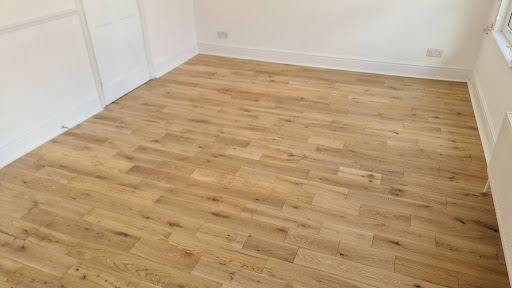
There’s no denying the magic of a home that retains its warmth despite the absence of radiators. The advent of underfloor heating has changed how modern interior design works by enabling designers to create homes that are free from clunky radiators while maintaining their beauty and functionality. However, what people do not realize until it is too late is that underfloor heating is just as dependent on the flooring materials used as anything else.
Using a material that serves as a thermal barrier is tantamount to paying for heating the ground underneath your home instead of warming the air in your living space. In contrast, using a material that is overly reactive to changes in temperature will only result in a heart-wrenching image of warped floorboards and cracking joints after one season.
So, what actually works? Let’s strip away the jargon and look at the real-world performance of the best flooring options on the market today.
The Efficiency Trap: Why Thickness and Density Matter
In the case of underfloor heating systems, we actually refer to “thermal mass.” There are materials that are “lazy” – they are heated for an extremely long time and then retain their warmth for many hours. In addition, there are “quick” materials that get heated immediately and cool down as soon as you switch off the system.
Most people aim at a floor that combines both properties, meaning it warms up rather fast while not demanding your heating system to function at full speed. In other words, density will matter much more than cost here. A dense material allows heat to vibrate through it effortlessly. A “light” or airy material (like a thick carpet or a cheap, hollow laminate) acts like a puffer jacket for your floor—great for keeping heat out, but terrible for letting it in.
1. Engineered Wood: The Unrivaled Champion
For a long time, there was a myth that you couldn’t have wood flooring with underfloor heating. If you use solid wood, that myth is unfortunately a reality. Solid wood is a natural, single piece product and will breathe, expand and contract. If you place a direct heat source underneath, wood will dry out and create gaps large enough to fit a coin.
Engineered wood changed the game. It is the only timber product that truly “works” with modern heating systems, and here is why.
The Anatomy of Stability
Engineered wood is a feat of modern layering. It features a top “wear layer” of genuine hardwood—like Oak or Walnut—bonded to a high-density multi-ply base. The different layers are attached to each other in opposite directions, thus, when the heat causes expansion, the two layers oppose each other, holding the board firmly in place.
Why Oak is the Industry Standard
When it comes to optimal performance, Engineered Oak flooring is almost unbeatable. This is because Oak is a dense hardwood which is resistant to wear-and-tear. This density makes it an excellent conductor. It doesn’t just look beautiful; it acts as a functional part of your heating system.
- Oak Durability: It will handle the slight changes in humidity caused by your heating turning on and off.
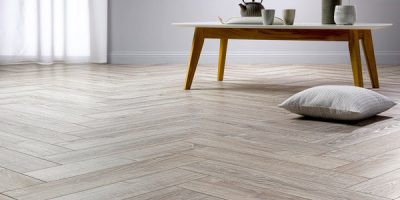
- Aesthetic Versatility: If you want a natural oiled finish, or perhaps a more contemporary look, a modern grey stain oak will take on colour more beautifully than the other types of wood.
The Luxury of Walnut
If you want a more elegant look with a darker colour palette, Engineered Walnut is the ideal selection. Although walnut is a bit on the softer side compared to oak, a premium engineered walnut will give you that dark, chocolaty look without the concern of the floor “moving” underneath you. It creates a sense of warmth that is both literal and visual.
2. The Case for Stone and Porcelain
If we consider only the speed that heat passes through materials, then heating elements set in stone or porcelain tiles would work the best. Marble and limestone, along with some high-end porcelain tiles, have what is called thermal resistance.
- The Advantage: Other materials will cause your room to take longer to reach your desired temperature.
- Disadvantage: It could be challenging to work with stone. With toddlers around, or when you are in the kitchen often, it may be difficult on the joints because of the hard surface. Without any heating on during a few months, the stone flooring will feel cold and clinical.
3. Luxury Vinyl Tile (LVT)
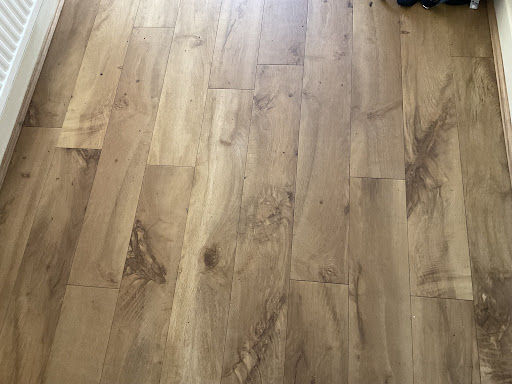
LVT has gained much in popularity due to its flexibility, strength, and waterproofing qualities. Because it is so thin (usually around 5mm), the heat has very little material to travel through. It is an excellent choice for utility rooms or bathrooms.
However, LVT comes with a strict “speed limit.” Most manufacturers insist that the floor surface never exceeds 27°C. If the system runs too hot, the vinyl can soften, leading to “gluing” issues or even discoloration.
Why Solid Wood is a High-Risk Gamble
We often speak with clients who are determined to use traditional solid oak planks. While we appreciate the heritage of solid timber, it simply isn’t built for the rigors of UFH.
This occurrence is attributed to the heating of the wood boards from underneath. The bottom portion of the board will dry faster than the top, and thus the edges of the boards will be raised. This leads to a washboard appearance of the whole floor. Not only is this unsightly, but it also creates air pockets between the floor and the heating system, which further reduces efficiency. If you want the look of real timber, engineered wood services are the only way to guarantee a flat, beautiful floor for the next thirty years.
The “Secret Sauce” of a Perfect Warm Floor
Even the most expensive engineered oak flooring will underperform if the installation is handled poorly. There are three technical factors that make or break a warm floor:
1. The Glue-Down Method
While many DIY-friendly floors use a “click” or “floating” system, we always recommend a full-bond glue-down installation for underfloor heating. Why? As air is a poor conductor. If there is some air gap left between the subfloor and your wooden planks, then the heat must make that gap, thus losing a little bit of heat while doing so.
2. Moisture Testing
You cannot lay wood over a new concrete screed until it is bone-dry. We use professional hygrometers to ensure the moisture levels are safe. Laying wood over a damp subfloor—even with the heating on—is the fastest way to ruin your investment.
3. Gradual Acclimatization
Wood is a natural product. It needs to “meet” its new environment. It is advisable that the flooring be left in the room for a period not less than 48 and 72 hours before being put in place. In this way, the moisture content of the wood will be equalized with the humidity level of the room environment.
Our Wood Flooring Services: Precision Meets Luxury
At Floorworks, we don’t just “lay boards.” We provide the most reliable flooring service, customized to suit your heating requirements. We have a thorough understanding of heat and how it affects the integrity of wood floors.
Why Work With Us?
- Custom Flooring Solution: Our philosophy of flooring is based on customization rather than providing a generic solution. Our experts will guide you to select the appropriate thickness and wood species for your heat pump or boiler systems.
- Certified Installation: Our team are specialists in UFH-compatible installation. It is our policy to plan for the expansion gaps and choose the right adhesives with extreme precision.
- Subfloor Preparation: The subfloor will be perfectly prepared by us through leveling and damp proofing.
- Longevity Warranty: We provide useful advice on the care of your flooring and how to warm it up for the first time.
Start Your Project
Proper selection of floor types will add a lot of value to your home, giving you an enhanced way of life. Do not just rely on luck. From rustic to elegant styles, whether you desire a wide planked oak floor type or walnut flooring, we got you covered.
Conclusion: Which Works Best?
When you need beauty and practicality inside your home, Engineered Oak Flooring is the only one for you. It has outstanding heat conduction, superior durability, and everlasting beauty. While it is true that stone flooring takes less time to install, and vinyl flooring is more affordable, nothing can compare to the aesthetic appeal of wood flooring.
Simply, when you purchase quality products and professional flooring services, you are actually purchasing an entire heating system for your home.












Comments