
 By
By 
Is the harsh sun and glare turning your backyard into a hot, unusable space? A simple, stylish fix is a sun shade sail. These handy covers help you take back your patio, deck, or garden by blocking harmful UV rays and cutting glare, so you can relax outside in comfort.
Is the harsh sun and glare turning your backyard into a hot, unusable space? A simple, stylish fix is a sun shade sail. These handy covers help you take back your patio, deck, or garden by blocking harmful UV rays and cutting glare, so you can relax outside in comfort.
Shade sails are more than good-looking decor. They’re a practical and often budget-friendly option compared with permanent builds like pergolas or awnings. They can block a large share of UV rays and can be made to fit many spaces, giving you a cooler, safer, and more inviting area outdoors.
Why Shade Sails Solve Sunburn and Glare Problems in Backyards
Backyards should be places to unwind. But strong sun can turn a nice day into a hot, squinty struggle. Knowing how sun exposure and glare affect you helps you set up a more comfortable outdoor area.
How Sun Exposure, UV Rays, and Glare Impact Outdoor Living
Even on mild or cloudy days, ultraviolet (UV) light is still there. UV is the main cause of sunburn and can raise the risk of skin cancer, including melanoma. It can also speed up skin aging and harm your eyes. In many places, the UV Index gets very high long before noon and stays high, which makes time outside risky without shade.
Direct sunlight also brings heat and glare. Infrared light makes you feel hot, while glare makes it hard to read, relax, or see clearly. Finding a spot outside that isn’t too bright or hot can feel like a constant chore.
How Shade Sails Block Harmful Sunlight
Shade sails act like a key shield, filtering and blocking UV light before it reaches your skin. Good sails use strong fabrics like high-density polyethylene (HDPE) or PVC-coated polyester that block a large share of UV. Many offer a UPF 50+ rating, which shows very high UV protection. With a good sail, you can spend more time outside with a much lower risk of sunburn and skin damage.
It’s more than just shade. UV can bounce off surfaces like sand and concrete. Fabrics with UV-stabilized yarns hold up for years in strong sun without breaking down fast, so the protection lasts.
Glare Reduction and Cooler Backyard Temperatures
Besides UV protection, shade sails cut glare so your eyes get a break and the space feels calmer. The shade also lowers the “feels-like” temperature under the canopy. Breathable fabrics let hot air escape instead of trapping it, so the area under your sail stays more comfortable, even at midday.
Selecting the Best Shade Sail for Your Space
Picking the right sail makes a big difference. It’s not only about looks-material, shape, size, and color all affect how well it blocks sun and glare.
Which Shade Sail Materials Provide Maximum UV Protection?
For sun protection, the fabric matters most. HDPE is a popular, strong, and affordable pick. It often comes with high UV ratings and it breathes well, helping the space stay cooler.
If you want better water resistance as well as UV protection, PVC-coated polyester is a higher-end choice. Whatever you pick, check the product specs for cover factor, UV rating, and warranty against UV damage so you get the protection you need.
| Material | Typical UV Protection | Breathable | Water Resistance | Best For |
|---|---|---|---|---|
| HDPE | High (often UPF 50+) | Yes | Light rain only | Daily shade and cooling |
| PVC-coated polyester | High (often UPF 50+) | No/Low | Waterproof | Rain cover and sun protection |
Comparing Popular Shade Sail Shapes and Sizes
Sails come in squares, rectangles, equilateral triangles, and right-angled triangles. Triangles are strong and easy to tension, great for small areas or layered designs. Squares and rectangles cover bigger spots like patios or dining areas and can feel like an “extra room” outdoors.
Pick a sail a bit smaller than the area so you can tension it well and avoid flapping in wind. If you have a unique space, custom sails are a good option for a perfect fit.
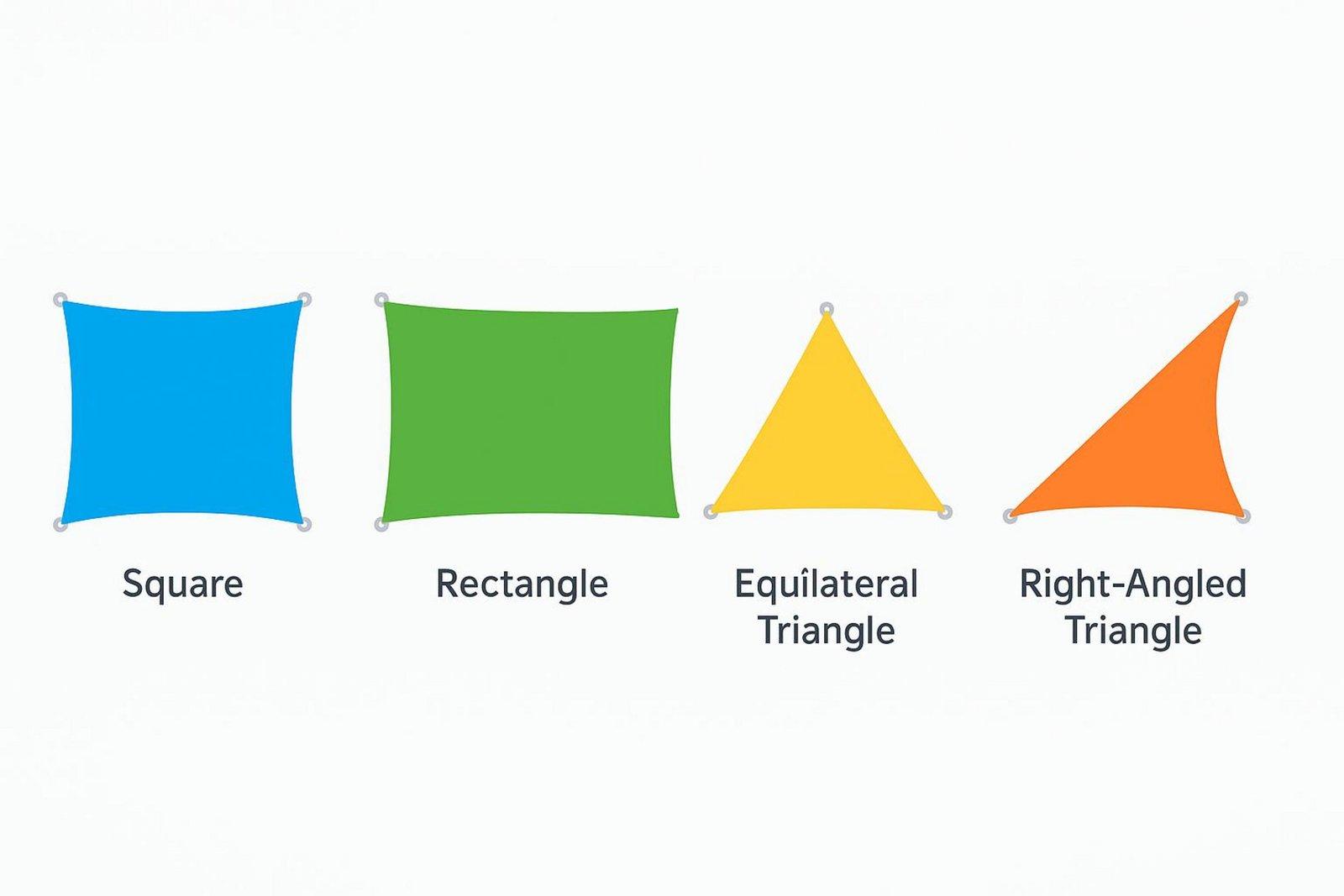
How Color and Fabric Density Influence Sun and Glare Protection
Color and fabric density both matter. Dark colors tend to block more light, which can mean better UV and glare control, but they may feel warmer. Light colors reflect more light and can feel cooler, though UV protection may be a bit lower depending on the weave and thickness.
Denser fabric usually blocks more UV and glare. At the same time, breathable fabric helps hot air escape. Aim for a high UV rating and a color and density that fit your style and needs so you get the best mix of shade, comfort, and looks.
Where to Position a Shade Sail for Maximum Effectiveness
Smart placement matters as much as fabric quality. A good sail in the wrong spot won’t block the sun when you need it.
How to Analyze Sun Paths and Glare Angles in Your Backyard
Start by watching how the sun moves across your yard during the day and across seasons. The sun sits low in the morning and afternoon and higher at midday, and it takes a different path in summer and winter. Note where direct sun causes the most heat and glare.
In many places, late-afternoon western sun can slip under a poorly placed sail. Plan for the hours you use the space most-meals, reading, kids’ playtime-and set anchor points to block sun during those hours.
Positioning Tips for Patios, Decks, Pools, and Gardens
For patios and decks, a square or rectangular sail can create an “extra room,” shading furniture so you can eat or relax at peak sun. Two corners on a wall and two on posts often work well.
Near pools, aim shade at steps or shallow areas where kids play. In gardens, sails can cool seating nooks or protect tender plants. For a corner sofa, a triangular sail tied to a wall or fence in the corner and to posts on the outer side can give custom shade. Portable sails can add quick shade for picnics or camping with a tree or wall for support.

Avoiding Common Mistakes in Sail Placement
- Ignoring changing sun angles, which leaves you with shade only part of the day.
- Installing too loosely, causing sagging, flapping, and water pooling.
- Keeping the sail flat during rainy weather; add a 20-30° pitch so water runs off.
- Using weak anchor points like gutters. Choose trees, reinforced fascias, or sturdy posts set in concrete.
- Skipping a tension plan; uneven pull can stress fabric and hardware.
Installation Steps for a Secure and Effective Shade Sail
Once you pick your sail and its location, the next key step is proper installation. A safe, tight setup helps it work well and last longer.
Step-by-Step Installation: From Measuring to Tensioning
The installation process starts with careful planning. Measure the area and the distances between anchor points, whether walls, trees, or posts. If you need new posts, mark exact spots for good tension and coverage. Double-check measurements. Use a level so anchor points are at the heights you want.
Install posts or hardware. For posts, dig deep, set them in concrete, keep them plumb, and let the concrete cure fully (about 24-72 hours). Attach each sail corner with hardware such as turnbuckles, D-shackles, or snap hooks, leaving some slack at first.
Now tension the sail. Tighten turnbuckles a little at a time, moving around the corners, until the sail is firm and smooth, like a drum. Avoid over-tightening. Check again after a few hours; fabric may settle and need a small tweak.
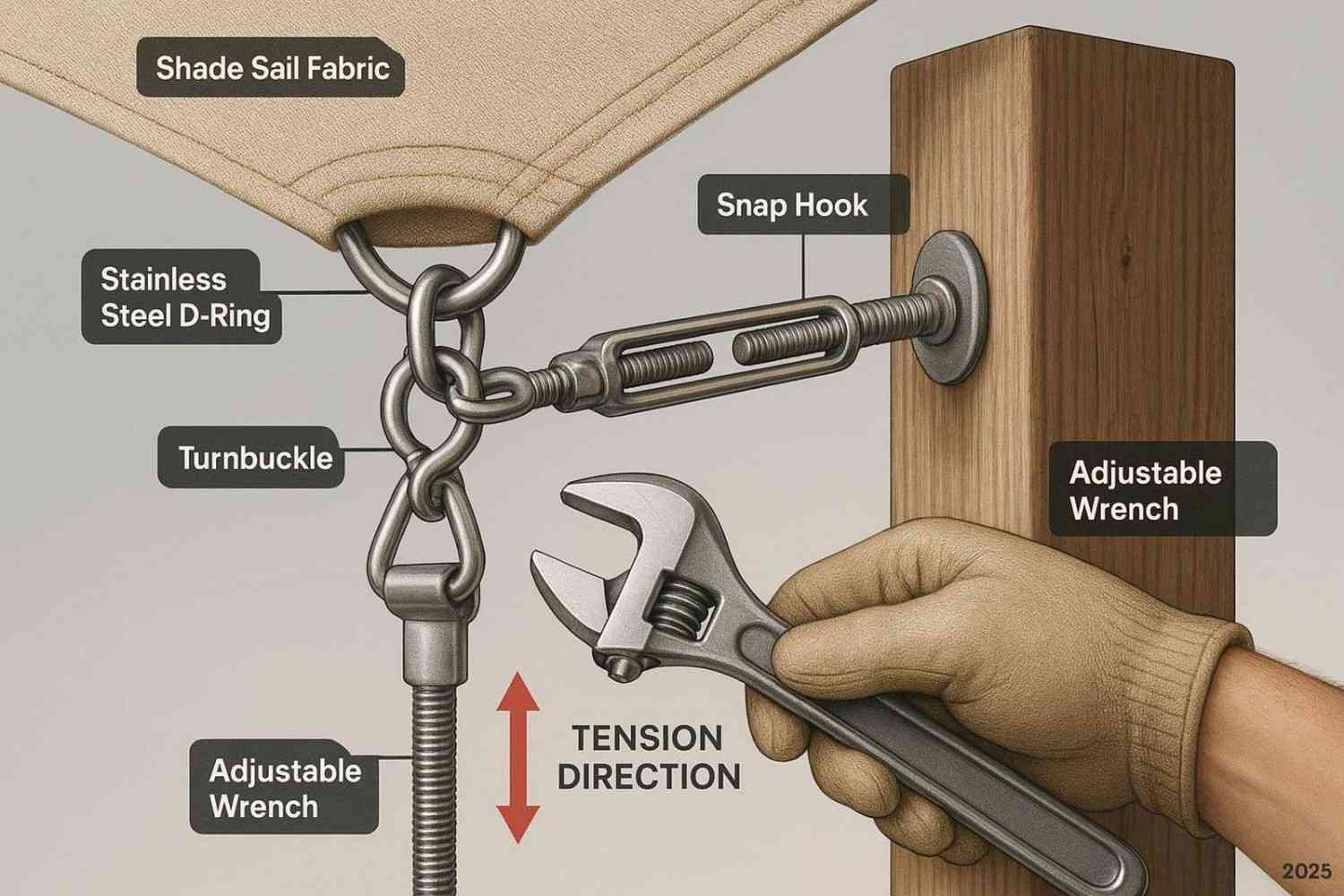
Choosing and Installing Support Posts or Anchor Points
Strong supports are the most important part of a safe setup. Good anchors include sturdy trees, solid fence posts, or your house fascia with proper brackets. If you need new posts, use steel or heavy-duty wood in solid concrete footings. Let the concrete cure before applying tension.
Anchors must handle high loads-around 150 lbs per point-so don’t cut corners. If you’re unsure about structure strength or post size, getting advice from a pro or structural engineer is a good idea.
How Tight Should a Shade Sail Be for Safety and Durability?
Getting the tension right keeps the sail neat and helps it handle wind and rain. Too loose and it will flap, make noise, collect water, and strain fabric and hardware. Too tight and you risk damage to fabric and anchors.
Aim for a taut surface that doesn’t sag. For wet weather or permanent setups, pull the sail very tight and add a 20-30° slope so rain runs off. Many sails have curved edges to help with extra tension. In windy spots, slightly higher tension helps reduce flapping.
Preventing Sunburn and Glare: Maintaining Your Shade Sail
Your shade sail protects your comfort and health. Regular care helps it last and keep doing its job.
Cleaning and Care for Long-Lasting Performance
Regular cleaning is important to keep it looking good and working well. Every few weeks, hose it off to remove dust and light debris. For a deeper clean, use mild detergent and water with a soft brush to lift dirt or bird droppings. Do not use harsh chemicals, bleach, or abrasive cleaners, which can harm the fabric.
Rinse well and let the sail air dry completely before rolling or storing it. Dry fabric prevents mildew and helps keep UV protection steady over time.
Inspecting for Damage and Weather Wear
Regular checks are very important. Look for rips, tears, frayed edges, or fading. Check the corners and connection points closely since they carry the most load. Inspect turnbuckles, D-shackles, snap hooks, and all hardware for rust or wear.
Also check posts, walls, and other anchors for loosening or damage. Tighten any loose bolts, nuts, or screws right away. Fixing small issues early prevents bigger, costlier problems later.
When to Replace or Retension Your Shade Sail
Wind and time can loosen tension. If you see sagging or flapping, retension with the turnbuckles. This quick step can clearly improve performance and extend the sail’s life. If you’re not comfortable doing this, call a qualified professional.
Quality sails can last 5-10 years or more with good care. Replace the sail if you see heavy fading, many tears, fabric breakdown, or weaker UV protection. Check the maker’s warranty for lifespan guidance. In areas with tough winters, take the sail down for the season to protect it from a snow, ice, and strong winds.
Frequently Asked Questions About Shade Sails for Sun and Glare Issues
Shade sails are a great solution, and these common questions can help you get the most from yours.
Are Shade Sails Waterproof or Only Sunproof?
Most shade sails focus on sun protection and are made from breathable fabrics like HDPE. They handle light rain but are not fully waterproof. Water can seep through, and flat or loose sails can pool water and stretch.
If you want full rain cover, choose a waterproof fabric like PVC-coated polyester. For rainy weather, make sure the sail is tight and pitched 20-30° so water runs off.
Can I Install a Shade Sail Myself or Should I Hire a Professional?
Many small sails are doable as a DIY project: measure, set anchors or posts, and tension the sail. You do need basic building skills, especially for posts set in concrete. Anchor points must be strong enough for around 150 lbs of pull each.
For large sails, tricky layouts, or if you doubt the strength of your anchors, hiring a pro is a smart move. They can review the site, soil, and wind, and set it up safely with good coverage and safe clearance underneath.
How Long Do Shade Sails Last in Harsh Weather?
Lifespan depends on fabric quality, local weather, and care. A good HDPE sail with UV-stabilized yarns often lasts 5-10 years. A warranty against UV damage is a helpful sign of how long it may last.
Extreme sun, strong winds, heavy rain, snow, and ice wear sails faster. Regular checks, quick repairs, proper tension, and seasonal removal in tough climates can greatly extend life. In harsh areas, choosing a thicker fabric with strong UV protection is a good idea.
What to Do If Your Shade Sail Gets Damaged?
For small tears or holes, a shade sail repair kit with matching patches and adhesive can work. For bigger damage or if you’re unsure, contact the maker for advice, warranty info, or repair services.
Act fast. Fixing small issues early helps prevent larger problems and keeps your sail working well. Regular inspections are your best defense.









Comments