
 By
By 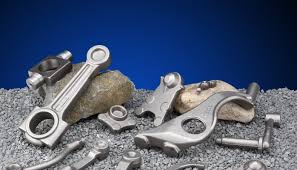
Closed die forging plays a critical role in modern manufacturing, offering a precise and reliable process for shaping metals into complex components. It involves placing a heated metal billet into a set of custom-designed dies, where the metal is compressed to fill the mold under high pressure. This process results in the production of closed die forging components with exceptional strength, durability, and dimensional accuracy.
Advantages of Closed Die Forging
1 Enhanced Strength and Durability
One of the most significant benefits of closed die forging is the superior mechanical properties of the components produced. The forging process aligns the metal’s grain structure, making the final product stronger and more resistant to fatigue and wear. This is particularly important in industries like aerospace, automotive, and oil and gas, where high-performance materials are required.
2 Precision and Complex Shapes
Closed die forging allows for the production of complex and intricate shapes that would be difficult or impossible to achieve using other manufacturing methods. The dies are precisely designed, ensuring that the closed die forging components meet tight tolerances. This capability makes it ideal for producing parts with complex geometries, such as turbine blades, gears, and engine components.
3 Reduced Material Waste
The closed die forging process is highly efficient, utilizing the material to its fullest potential. The metal is forced into a confined die space, minimizing the need for excess material. This not only reduces waste but also lowers the overall production cost compared to other methods like machining or casting, where significant amounts of raw material may be discarded.
4 High Production Volumes
Once the dies are created, closed die forging is capable of producing high volumes of components in a short amount of time. This makes it an excellent choice for industries that require large quantities of high-quality parts, such as automotive manufacturers producing engine blocks or transmission components.
Applications of Closed Die Forging Components
The versatility of closed die forging makes it suitable for a wide range of industries. Some of the most common applications include:
Aerospace
Components such as turbine blades, landing gears, and engine parts are often made using closed die forging to meet the high-performance standards of the aerospace industry.
Automotive
Many critical components, including crankshafts, connecting rods, and gears, are forged using closed die techniques to ensure their strength and reliability under extreme operating conditions.
Energy and Oil & Gas
In the energy sector, components like valve bodies, flanges, and structural parts for rigs are produced using closed die forging to withstand the harsh conditions of deep-sea drilling or power generation.
Conclusion
Closed die forging is a pivotal process in the manufacturing world, providing high-quality, precision-engineered components that are crucial in various sectors. Its ability to produce strong, durable, and complex parts with minimal material waste makes it a preferred method for manufacturing critical closed die forging components. By continuing to advance the technology behind closed die forging, manufacturers can meet the increasing demands for more intricate, stronger, and higher-performance parts across industries.















Comments