
 By
By 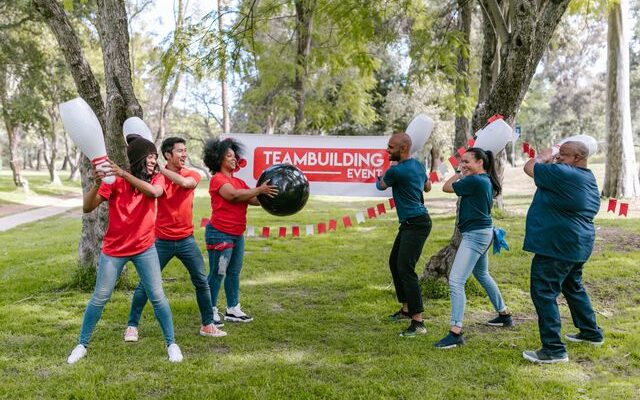
Few phrases generate mixed reactions quite like “team-building activity.” For some employees, it brings to mind enjoyable experiences and opportunities to connect with colleagues. For others, it can create images of awkward exercises, forced participation, and activities that feel disconnected from everyday work.
The irony is that the most effective team-building experiences rarely feel like team-building at all. Instead of focusing on obvious lessons or structured exercises, they create environments where collaboration, communication, and relationship-building happen naturally. Participants leave feeling entertained, engaged, and connected without necessarily realising how much they have learned about their colleagues along the way.
Understanding why certain activities succeed while others struggle can help organisations create more meaningful and memorable events.
One of the main reasons traditional team-building sometimes falls flat is that people quickly recognise when an activity feels forced. Adults generally respond better to authentic experiences than they do to exercises designed to produce a specific behavioural outcome.
When participants feel they are being instructed to bond, collaborate, or communicate, the experience can sometimes feel artificial. People may participate because they are expected to rather than because they are genuinely engaged.
By contrast, activities that focus on a shared objective often generate stronger results. When individuals work together to solve a challenge, complete a task, or achieve a goal, teamwork develops as a natural by-product of the experience.
This distinction is important. The activity itself becomes the focus rather than the team-building message behind it.
Shared experiences play a powerful role in building workplace relationships. Whether people are solving puzzles, participating in friendly competition, or overcoming unexpected challenges, they create memories together. These shared moments often become the stories that colleagues continue discussing long after the event has ended.
The strongest workplace relationships are rarely built through formal discussions about teamwork. More often, they emerge through genuine interactions and shared experiences that allow people to see different sides of one another.
Another reason successful team-building feels natural is that it encourages authentic communication. In everyday working environments, interactions can sometimes become limited by roles, departments, and organisational structures.
A well-designed activity creates opportunities for conversations that might not otherwise happen. Employees who rarely work together may suddenly find themselves collaborating toward a common objective. Senior leaders and junior team members may interact in a more relaxed and informal setting.
These interactions often help break down barriers and encourage stronger connections across the organisation.
Fun also matters more than many people realise. Enjoyment should not be viewed as a distraction from business objectives. In many cases, it is what makes those objectives achievable.
When people are enjoying themselves, they tend to be more open, more engaged, and more willing to participate. They contribute ideas more freely, communicate more naturally, and become more invested in the experience.
This is one reason why activities centred around entertainment, creativity, or problem-solving often produce stronger outcomes than highly structured exercises designed to teach specific workplace skills.
Around the point where organisations begin exploring event ideas, many discover that the most successful programmes focus less on obvious team-building and more on creating memorable experiences. Event specialists such as The Big Smoke Events often design activities that prioritise engagement and enjoyment first, allowing collaboration and relationship-building to emerge organically.
Another important factor is inclusivity. Activities that feel like traditional team-building can sometimes create anxiety among participants who are naturally quieter or less comfortable in highly competitive environments.
Experiences that offer multiple ways to contribute tend to produce better results. When people can participate according to their strengths, they are more likely to feel comfortable and engaged.
A successful event allows different personalities to shine. Some individuals may take leadership roles, while others contribute through creativity, organisation, observation, or problem-solving. Recognising and valuing these different contributions helps strengthen team dynamics.
The setting itself can also influence outcomes. Moving people away from their normal work environment creates opportunities for different behaviours and interactions. Colleagues who are accustomed to seeing one another only in meetings often engage differently when placed in a more relaxed setting.
This change of environment can encourage fresh conversations and help people view each other from a new perspective.
One common misconception is that team-building should always involve direct workplace lessons. In reality, the strongest outcomes often come from experiences that focus on human connection rather than business objectives.
Trust, communication, and collaboration are strengthened when people enjoy spending time together. These qualities are difficult to manufacture through formal instruction but can develop naturally through shared experiences.
The lasting impact of successful team-building is often seen back in the workplace. Teams that have connected outside their normal environment frequently communicate more effectively and work together more comfortably afterwards.
Importantly, this happens because relationships have been strengthened rather than because participants were explicitly taught how to collaborate.
The best team-building activities succeed because they do not feel like team-building. They create opportunities for people to connect, communicate, and enjoy shared experiences without forcing those outcomes. Participants become focused on the challenge, activity, or experience itself, while the relationship-building happens in the background.
When organisations shift their focus away from obvious lessons and towards meaningful experiences, they often achieve far better results. Employees return to work with stronger connections, improved understanding of their colleagues, and positive memories that continue to influence workplace relationships long after the event is over.
In the end, effective team-building is often at its most powerful when nobody is thinking about team-building at all.















Comments