
 By
By 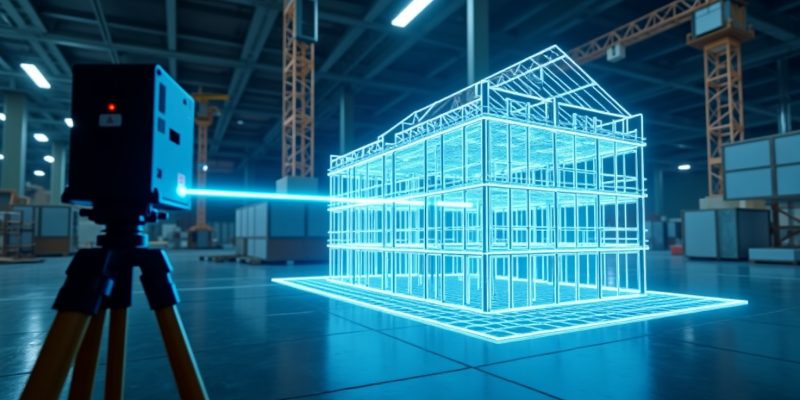
The construction and architecture industries are dynamic times, and accuracy is all that matters. Even the simplest measurement error or miscalculation can be the cause of costly construction delays/redesigns, or structural collapse.
Premium 3D Building Scanning Accuracy is a breakthrough in this space. By utilizing high-end scanning technologies, we can provide value with the most accurate, detailed, and reliable data that can help shape the success of each phase of your project.
But what makes a scan “premium,” exactly? And how does your project benefit when you reach those levels of accuracy? We are going to discuss everything from what 3D building scanning services are to how to achieve premium accuracy, and everything in between, in this blog.
What is Premium 3D Building Scanning Accuracy?
Premium 3D Building Scanning Accuracy is to be used to describe the highest level of precision determined by high-end scanning technologies. This level of scanning captures the most precise depiction of an existing building, structure or site.
These types of scans create point clouds or digital models that can be used for renovations, retrofit, architectural designs, and planning a construction project with a very small margin of error. It is so much more than basic measurements as premium accuracy is:
- Precision at the millimeter level
- The scanning data has little to no noise or distorted outputs.
- The texture maps are high-resolution.
- Georeferencing and alignment are correct.
Achieving this level of accuracy correlates to better informed decisions, cost containment, and construction efficiencies.
Why Accuracy Matters in 3D Building Scanning?
In the 3D building scanning services market, accuracy isn’t a convenience – it’s a requirement. Here is why that is the case:
- Reduced Rework: Estimation of construction can result in wrong orders of material, poor built assets and corrections and rework which creates errors and wastages of time.
- Enhanced Collaboration: Achieving the correct digital twins ensures that the architects, engineers, and stakeholders do not end up reviewing different data thus being at different pages.
- Better Design Decision Making: Accurate and high-resolution scans allow a designer to assess space issues and constraints, materials, and utilities.
- Regulatory Requirements: Many government and municipal agencies are requiring high-level accuracy of scan data for any permits or approvals in the very near future.
Tools and Technologies That Drive Premium Accuracy
To achieve a level of accuracy equivalent to a high-end 3D building scanning services solution, the user must use a set of tools and technologies appropriate to the accuracy being required. A review of the most common tools is provided below:
1. Laser Scanners (LiDAR)
LiDAR scanners utilize a technique called Light Detection and Ranging to emit laser pulses, measure the time it takes for the emitted laser beam to return after being reflected, and measure data points with millimeter accuracy.
Because of their extreme precision, speed, and a wide variety of uses, LiDAR scanners are used extensively in the field of 3D building scanning services.
2. Photogrammetry
This type of scanning combines many photographs, taken at a slight angle and from multiple viewing locations, to create a 3D model.
Photogrammetry can provide a high-resolution model that could not be completed with a LiDAR scan alone. Photogrammetry also supports LiDAR by adding realistic texture mapping to the photogrammetry model.
3. Structured Light Scanners
These use projected light patterns to measure changes on surfaces to a high degree of accuracy, perfect for capturing complex architectural details.
4. Scan-to-BIM Software
After you have captured all the scans, the data can then be processed using Scan-to-BIM software like Revit, AutoCAD, or FARO Scene to convert a lot of raw point clouds into usable 3D building models.
7 Best Practices to Match Premium 3D Building Scanning Accuracy
If you’re a professional that is working to achieve premium levels of accuracy with 3D building scanning, below are some key best practices for success:
1. Choose the Right Scanning Technology
Different scanning instruments do different things. Exteriors and large spaces are ideal to be scanned using laser-based scanning, whereas interiors or complex layouts require structured-light or handheld scanners. The first step towards reaching premium levels of accuracy is making the right choice of the instrument to be used in doing the job.
2. It is always good to calibrate the equipment prior to its use.
The next step to scan accuracy is regular calibration of the scanners so that it can capture data within the manufacturer’s specs. Without calibrating the scanner, you may get damaged or inaccessible scans.
3. Design and Strategically Map the scan path
You have to consider scanning places, angles, and overlaps before starting a scan. Proper planning will help eliminate the gaps in sampled space to a greater extent, and the overlap between the point clouds is also provided in a much better way.
4. Ensure Proper Lighting Conditions
LiDAR-based scanners are less sensitive to lighting conditions, but photogrammetry and hybrid scan systems require proper lighting for vision and precision.
5. Use Quality Targets and Markers
You should use reference targets and markers for multi-scanning purposes in order to help align scans correctly in the post-processing workflow. Having a great quality target is a good investment, resulting in better alignment of scans and minimizing registration errors.
6. Process Data with Quality Software
Gathering the best raw data is useless unless it is processed. To clean, register and convert scan data using an industry-accepted final deliverable software vendor such as FARO, Leica Cyclone, or Autodesk ReCap.
7. Train Your Staff
While people’s subjectivity is not the only factor in accuracy, it is certainly one of them. Invest in training your people, or hire competent people who have a good understanding of the scanning data.
How to Choose a Service Provider Offering Premium Accuracy?
If you are going to use the services of a third-party scan, the right 3D building scanning services provider can either make or break your project. What to consider:
- Experience and Portfolio: Have they completed buildings with a similar typology and complexity?
- Technology Stack: Do they use current scanner technology and software?
- Certification and Training: Are there technicians within the company certified in scanning tools and interpreting data?
- Turnaround Time: Are they able to deliver accurate results while meeting timelines?
- Post-Scan Support: Do they assist with scans to BIM or CAD models?
You want a provider who focuses on Premium 3d scanner india Accuracy in every aspect of their service.
Applications That Demand Premium Accuracy
While nearly every project will gain from accurate scans, there are some situations where premium accuracy is necessary:
- Historic Preservation: Documenting complex architectural features for a successful restoration
- Industrial Facility Mapping: To develop proper equipment layouts or safety enhancements
- Hospital or Lab Build-Out: Each inch is important to meet compliance requirements and blast plans
- Luxury Residential Projects: It is important in the aesthetic to be of premium precision
- Government Infrastructure scans: Often, there are regulatory standards that must be met
Common Challenges and How to Overcome Them
Even with the best tools, achieving premium 3D building scanning accuracy can come with challenges:
| Challenge | Solution |
| Scan noise and artifacts | Use filters and software cleanup tools |
| Poor surface reflectivity | Adjust scanning angles and use surface-enhancing sprays |
| Alignment issues in multi-scan | Use high-contrast targets and advanced registration software |
| Large data files | Use point cloud compression and cloud-based processing |
By anticipating and solving these issues, you can maintain consistent scanning quality.
Conclusion
Achieving the highest level of 3D building scanning accuracy is not an uncomplicated process; it is a combination of using the right technology, following established best practices, and hiring experienced Premium 3D Building Scanning Accuracy operators.
As the industry’s demand for represented accuracies using digital clones increases within architecture, construction, and engineering, the emphasis on quality is likely to be an opportunity for differentiation among providers of 3D building scanning services.
Need trusted and accurate 3D scanning? Fibrox3D offers industry-grade solutions tailored according to your quality assurance preferences. No guesswork involved – leave it to Fibrox3D to digitize your parts with micron accuracy and full reporting support.
Also Read: Discover the Best 3D Printing Services in Vadodara: Your Complete Guide















Comments