
 By
By 
Most people don’t think about their boiler until something goes wrong. As long as the heating works and there’s hot water when you need it, it tends to stay out of sight and out of mind.
Boilers rarely break down out of nowhere — but the early warning signs are easy to miss. In many cases, being aware of any small changes or unusual behaviour in your heating system can help you spot issues that, if ignored, might lead to bigger problems over time.
The good news is that keeping your boiler in good condition doesn’t require expert knowledge or constant attention. A few simple checks and some basic maintenance can go a long way towards preventing problems and keeping things running efficiently all year round.
1. Check Your Boiler Pressure Regularly
Your boiler relies on the correct pressure to work properly. If the pressure is too low, the system may struggle to heat your home or could shut down altogether.
Most boilers have a pressure gauge on the front. As a general guide, it should sit somewhere between 1 and 1.5 bar when the system is cold.
It’s worth checking this every few weeks, especially during colder months when the system is used more often. If you find yourself topping up the pressure regularly, it could point to a leak or another underlying issue that shouldn’t be ignored.
2. Pay Attention to Unusual Noises
Boilers aren’t completely silent, but they shouldn’t be making loud or unusual sounds either.
Banging, gurgling, knocking or whistling noises can indicate problems such as trapped air, limescale build-up, or issues with the pump. While these noises might seem minor at first, they’re often one of the first signs of a problem that could worsen over time if left unchecked.
Catching these early can help avoid more serious repairs later on – as well as bringing back some peace and quiet to your house!
3. Don’t Ignore Small Changes in Performance
It’s easy to overlook small changes, especially if your boiler is still working overall.
However, things like inconsistent heating, longer warm-up times, or hot water taking longer than usual can all be early warning signs. These issues often start gradually and become more noticeable over time.
If something doesn’t feel quite right, it’s usually worth paying attention to rather than waiting for it to get worse.
If you’re unsure what’s normal and what isn’t, it can help to understand some of the more common boiler repair warning signs and what they might indicate.
4. Book an Annual Boiler Service
One of the most effective ways to keep your boiler running efficiently is to have it serviced once a year.
A qualified engineer will check key components, clean parts where needed, and make sure everything is operating safely. This helps catch small issues before they turn into more serious faults. Regular servicing and the occasional minor fix is almost always cheaper in the long run than a sudden catastrophic failure – not to mention less stressful.
Regular servicing can also improve efficiency, which may help keep energy costs down over time. A clean boiler is a happy boiler — and it’s far more likely to keep running smoothly for longer.
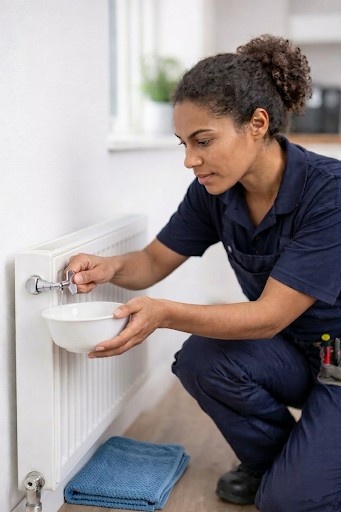
Bleeding a radiator can help restore heat if cold spots appear.
5. Bleed Your Radiators When Needed
If your radiators have cold spots or take longer than usual to heat up, trapped air could be the cause.
Bleeding your radiators allows this air to escape and helps restore proper circulation throughout the system. It’s a simple job that many homeowners can do themselves, but it’s important to take care not to release too much pressure at once – this guide explains how to bleed a radiator safely.
If you find that you need to bleed your radiators frequently, it may be a sign of a deeper issue within the system.
6. Keep the Area Around Your Boiler Clear
It might not seem like a big deal, but keeping the space around your boiler clear can make a difference. For many people, the boiler is often tucked away in a closet, garage or basement along with all manner of items you only use occasionally. It’s a convenient storage space – but blocking in your heating system with boxes, cleaning products, and other items can restrict air flow and hurt your boiler’s efficiency.
Good airflow helps the system operate properly, and having clear access makes it easier to spot leaks or other issues early. It also allows engineers to carry out servicing or repairs more easily when needed. Try to leave a small gap around the boiler so air can circulate properly.
7. Use Your Heating Occasionally in Summer
During warmer months, it’s tempting to leave the heating off completely for long periods.
However, turning the system on briefly every few weeks can help keep components moving and prevent parts from seizing up. Even running it for 10–15 minutes occasionally can make a difference.
This small habit can help reduce the risk of issues appearing when you first turn the heating back on in colder weather.
8. Keep an Eye on Your Energy Bills
A sudden increase in your energy bills isn’t always down to external factors. In some cases, it can indicate that your boiler is becoming less efficient.
As systems age or develop faults, they often need to work harder to produce the same level of heat. This can lead to higher energy usage without you necessarily noticing a change in how you use your heating.
If your bills are rising unexpectedly, it may be worth investigating further.
Final Thoughts
Looking after your boiler doesn’t have to be complicated, and many of these checks only take a few minutes. In most cases, it’s about paying attention to small changes and taking simple steps to keep things running smoothly.
It’s also worth noting that the autumn and winter months are peak season for plumbers and heating engineers. Booking a service visit in the spring or summer might be faster – and possibly cheaper – than waiting until everyone else needs their heating checked too.
By checking your system regularly and dealing with minor issues early, you can reduce the risk of unexpected breakdowns and avoid more costly repairs later on. If you’re dealing with ongoing issues or want a clearer idea of what might be going wrong, you can find more detailed boiler repair advice here.
A little maintenance now can go a long way towards keeping your home comfortable, no matter the time of year.
















Comments