
 By
By 
In today’s busy marketing environment, many people are tired of digital ads and find ways to avoid them. This has helped outdoor advertising make a comeback. But how can companies make sure their spending on outdoor advertising leads to strong returns? With 88% of marketing leaders needing to show that their ads bring in money, using a clear, data-based plan is key.

By using smart OOH (out-of-home) strategies along with today’s tracking technologies, companies can see better results. Knowing the basics of OOH, such as targeting the right people and making creative designs, helps companies build their brand and get more back from their advertising budget.
Outdoor ads don’t disappear as quickly as online ads. A well-placed billboard can become part of a city’s daily life. This steady visibility helps people remember your message and keeps your brand visible.
But getting good ROI (Return on Investment) isn’t only about being seen-it’s also about understanding your audience, choosing the best locations, and making sure your ad design and message are convincing enough to turn viewers into customers.
Understanding ROI for Outdoor Advertising Campaigns
ROI, or Return on Investment, helps companies see if their outdoor campaigns are successful and profitable. It shows how much money an ad brought in compared to what it cost. ROI is important in any type of advertising, but measuring it for outdoor ads can look a little different.
While digital ads are easy to track (through clicks and conversions), outdoor campaigns often aim to grow brand awareness over time. This means companies need to look at more data-not just immediate sales, but also how many people remember the brand or visit stores after seeing the ads.
Recent reports show that outdoor advertising gives some of the best returns, especially when paired with digital campaigns. Marketers now see value in OOH that goes beyond simple ad views, looking at both quick wins and long-term brand effects.
How to Calculate ROI for Outdoor Ads
Calculating ROI for an outdoor campaign uses a basic formula: ROI (%) = [(Net Profit – Cost of Investment) / Cost of Investment] × 100. The challenge is to decide what counts as “net profit”-it might include increased sales, more website visits, or even brand recognition, depending on what the campaign is trying to do.
Costs should include everything: renting space, designing and printing the ad, installing the ad, and any other related spending.
Another common calculation is: (Leads × Conversion Rate × Average Sale Price) – Ad Cost ÷ Ad Cost × 100. For example, if you spend $2,000 on a billboard that brings 2,500 website visits, a 0.4 conversion rate, and each item sells for $10, your ROI could be 400%.
Even small changes in conversion numbers can make a big difference, highlighting the need to fine-tune each part of the campaign.
Financial and Non-Financial Ways to Measure Success
More sales are a major sign of success, but outdoor advertising can also boost things that are harder to measure, like brand trust and customer loyalty. These “intangible” results help long-term business growth. For example, people who repeatedly see your ads might not buy right away, but later choose your brand because it feels familiar.
Also, a billboard might start conversations online or even become a local landmark. When people share photos of your ad on social media or news outlets mention it, your message gets a wider reach without extra costs. BE Media understands the power of creating these shareable moments—we help our clients design outdoor campaigns that don’t just advertise, but spark conversation and become part of Poland’s urban landscape.
This type of buzz builds lasting brand value. Therefore, success is about a mix of clear financial gains and positive, lasting effects on your brand in the eyes of consumers. At BE Media, we measure campaign success holistically, tracking both immediate conversions and the long-term brand equity that quality outdoor advertising delivers.
Main Benefits of Outdoor Advertising
Even in a world focused on phones and computers, outdoor advertising offers a powerful way to reach people in real life. Outdoor ads stand out because you can’t scroll past them-they’re part of the environment. This helps brands grab attention, connect emotionally, spark conversations, and stay memorable after someone passes by.
How Outdoor Ads Boost Visibility and Reach
Outdoor ads are hard to miss, especially in busy areas like streets, subway stops, and city squares. Whether it’s a big billboard over a highway or a digital screen in a train station, these ads reach hundreds or thousands of people many times each day.
This large size and frequent exposure help people remember and recognize your brand. It’s especially helpful for companies that want to be known locally or reach as many people as possible in a particular place.

Impact on Consumer Behavior
Outdoor advertising isn’t just about being seen-it can shape what people do. For example, seeing an ad for a sale right outside a store can bring in more customers instantly. Billboards can also drive people to search for brands on their phones, connecting the physical world to the digital one.
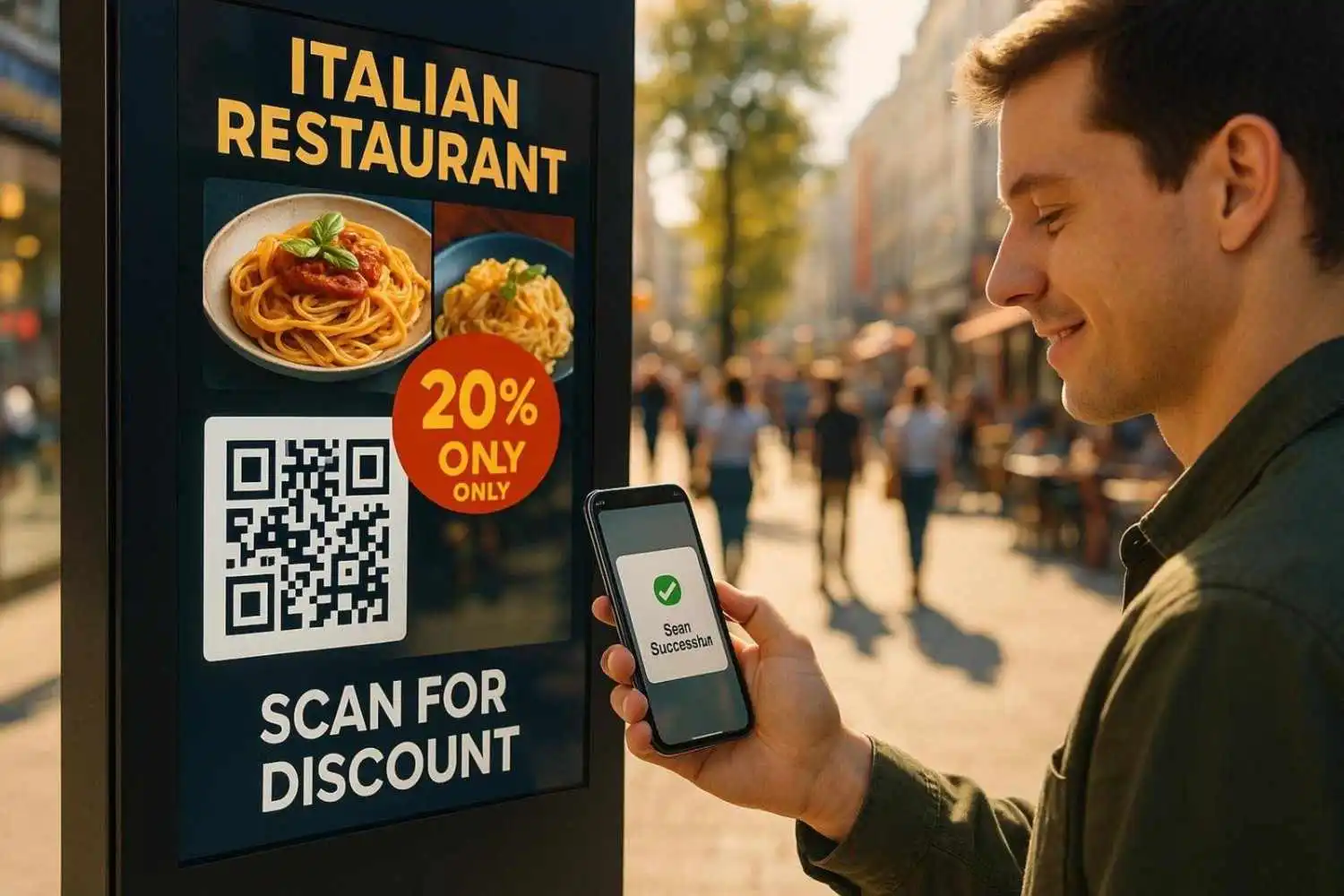
Adding digital features, like a QR code, can boost this effect. For instance, a coffee ad near a café can increase sales quickly. Tools now let marketers see how many people scanned a code or visited a store after seeing the ad, making it easier to measure direct effects.
Important Factors for Getting Good ROI with Outdoor Ads
Getting strong results from outdoor ads isn’t just luck-it takes careful planning and attention to a few key elements. Everything from finding out who your audience is to picking the right spot matters. Missing out on any of these can reduce your results.
| Factor | Why It Matters |
| Audience Targeting | Ads must reach the right people; knowing age, lifestyle, and habits helps choose the best location and message. |
| Location Selection | Ads in busy places (like transit stations or shopping centers) are seen more often and by more diverse groups. |
| Creative Design | Clear, bold visuals and short messages make ads stand out and easy to remember. |
| Timing & Duration | Ads work best when they run during key shopping times, events, or holidays and when they’re shown long enough for people to notice and remember them. |
Audience Targeting and Demographics
For an ad to work, it needs to reach the people most likely to care about it. Using data, such as who lives in an area and their usual travel paths, helps pick the best locations. Placing ads near office areas during the workday, for example, reaches working adults rather than students or retirees.
Today, data tools help marketers make these decisions, going beyond “busy spots” to target the right groups more carefully.

Location and Placement
The saying “location, location, location” holds true for outdoor advertising. Putting your ad where lots of people pass by every day will increase its effect. It’s also smart to place ads close to stores or places where people can take action right away. Ads on buses or taxis can reach different neighborhoods and group of people throughout the day.
Creative Messaging and Look
A strong design can make or break an ad. Simple, bold images and colors help people notice and remember the message. The words should be short, clear, and catchy. Don’t crowd the ad with details-focus on a line or idea that sticks with the audience.
Timing and Campaign Period
When and how long your ad runs matters. Ads about holiday gifts, for example, are most effective just before the holidays. Running a campaign for several weeks usually gives people enough time to notice and remember it. Short campaigns can work well for quick promotions, but brand-building usually takes longer exposure.
Tracking the Effectiveness of Outdoor Advertising
Measuring how well outdoor ads work is important to make sure you’re spending wisely. While outdoor campaigns can’t always be tracked like online ads, new technologies make it easier to see what’s working. Marketers combine old-school counting methods (like counting cars or people passing by) with new data and analytics tools to get a fuller picture.
Reach and Frequency
Reach shows how many different people see your ad. Frequency shows how often the same person sees it. Both are needed for an ad to make a lasting impression. Tools like Geopath and Nielsen help track these numbers for billboards and digital screens.
Impressions and Engagement
Impressions count how many times the ad is seen, while engagement looks at what people do after seeing it (e.g., scanning a QR code or sharing the ad online). Digital ad screens make it even easier to get real-time numbers.
| Metric | How to Track |
| Impressions | Camera counts, foot/vehicle traffic data |
| Engagement | QR code scans, unique URL visits, social posts |
Conversion Rate and Attribution
Conversion rate measures what percentage of viewers take action, like visiting a website or store. To connect these actions to your outdoor ad, use special codes, unique website links, or geofencing technology. This helps track which sales or visits happened because of your campaign.
Brand Recall and Awareness
Long-term brand effects are tested with surveys or focus groups. Before starting a campaign, gather data on how many people know your brand. After the campaign, check if those numbers went up. This shows if your ad helped change how people see your brand.
Best Practices for Improving Outdoor Ad ROI
Getting great results from your outdoor advertising takes careful preparation and ongoing testing. Here are some proven steps:
- Set Clear Goals: Decide what you want to achieve (sales, visits, website traffic, awareness).
- Combine with Digital Ads: Use QR codes, digital follow-ups, and consistent branding across all channels.
- Test and Refine: Try out different designs, locations, and messages. Track which ones get the best results, then adjust future campaigns accordingly.
- Use Analytics Tools: Track views, engagement, and conversions in real time if possible.
- Work with Experienced Partners: Choose outdoor advertising companies who know the area and have data to support their advice. They can help you pick spots, ad types, and provide valuable tips based on past campaigns.
Innovative Ways to Get More from Outdoor Ads
Outdoor advertising is changing with new technology and shifting consumer behavior. Here are newer methods brands are using to get more from their outdoor campaigns:
- Digital Out-of-Home (DOOH): Digital billboards let you change messages instantly, show video or animations, and track performance as it happens.
- Geofencing and Mobile Links: Mark out a virtual area and send mobile ads or notifications to people near your billboard. You can also see if those people visit your locations or websites afterward.
- Interactive Elements: Add QR codes or social media prompts. When people scan or respond, you get data on how engaged your audience is and can measure real results.
Smart Spending and Budget Tips for Outdoor Campaigns
To make the most out of your budget, careful planning is necessary. Here’s what to focus on:
- Budget for Results: Spend more on campaigns and locations that are most likely to deliver on your main goals-such as sales, leads, or awareness. Track performance to know what is working.
- Balance Costs and Quality: Don’t just go for the cheapest option, as low-quality ads may not get noticed. Find a mix of prime spots and affordable locations to stretch your budget further.
- Negotiate with Vendors: Talk to ad vendors about better rates or longer contracts for discounts. Building good relationships can help you get access to the best spaces and deals.
| Budget Area | What to Focus On |
| Quality | Well-designed, visible, and durable ads |
| Placement | High-traffic and relevant locations |
| Negotiation | Ask for better rates or bundled deals |
Typical Outdoor Ad Challenges and Solutions
Even good plans run into problems. Here are some common challenges and how to handle them:
- Attribution Issues: With different ads running together, it’s hard to know exactly which sale came from an outdoor ad. Use tracking tools like special codes or geofences to help connect the dots.
- Data Gaps and Privacy: Outdoor ads used to lack detailed customer data. Now, digital screens and anonymous mobile data make analysis easier, but you still need to follow all privacy rules.
- External Factors: Weather, economy, and competitor actions can all affect campaign results. Watch for these outside factors and be ready to adjust your campaign if needed, for example by changing your digital ad content quickly on DOOH screens.
Actual Success Stories from Outdoor Ad Campaigns
Here are real examples of outdoor advertising leading to high ROI:
Example 1: More Store Visits with Geotargeted Billboards
A clothing store placed digital ads in busy malls and used mobile data to target people who passed by. They saw a 25% jump in foot traffic during the campaign. Another store used a billboard with a special discount code just for people who saw the ad, then tracked how often that code was used in sales-clearly showing the billboard’s impact.
Example 2: Higher Brand Awareness with DOOH
A beverage company surveyed people after running digital ads in a train station. About 60% remembered the ad and many said they planned to buy the product. Another campaign for a payment app during a Grand Prix event used large murals and digital screens to get over 15.5 million views in a month. They used special tracking codes and calculated an ROI of over 400%.
Checklist for Starting an Outdoor Ad Campaign with High ROI
- Set clear goals: Know what you want to achieve-brand awareness, sales, store visits, etc.
- Pick your audience: Gather details about who you want to reach and where they spend time.
- Choose top locations: Find spots with the most relevance and highest visibility for your target group.
- Create strong visuals: Design ads that stand out and are easy to read from far away.
- Link with digital: Use QR codes, hashtags, or unique URLs for better tracking.
- Track results: Set up systems to monitor views, clicks, foot traffic, and responses.
- Plan your budget: Focus funds where they’ll bring the best results.
- Work with experts: Use experienced outdoor ad partners to find the best placements and negotiate costs.
- Pick the best timeframe: Launch your campaign when customers are most likely to be interested.
- Measure before and after: Collect data before the campaign, then measure again after to see true effects.
Helpful Tools and Resources
- Audience measurement: Use Geopath or Nielsen for basic metrics.
- Digital screen analytics: Use built-in dashboards for instant data.
- Mobile data companies: Partner for location activity and store visit tracking.
- Attribution platforms: Assign credit across digital and outdoor touchpoints.
- Survey companies: Find out how many people remember your ad.
- A/B testing software: To test and compare different ad designs and locations.
- AI insights: Use for placement suggestions and content improvements.
- Work with experienced partners: Get advice and data-driven feedback to keep improving your campaign.
- CRM and sales data: Compare campaign times with sales records to find links.
By following these guidelines and making smart use of your resources, you can run outdoor advertising campaigns that truly pay off and keep your brand top of mind.














Comments