
 By
By 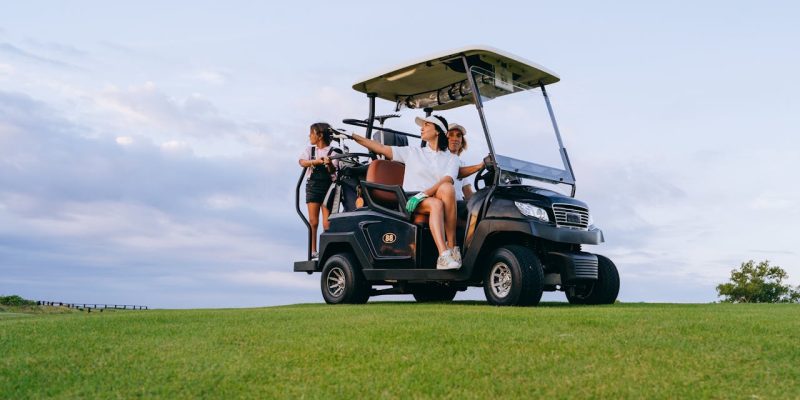
Scotland, golf’s spiritual home, hosts some of the world’s most revered and historic courses. Yet, for the golfer with mobility impairment, playing these historic courses can pose special challenges. This guide covers the particular considerations, possibilities, and approaches for golfers with mobility requirements who desire to play Scotland’s stunning golfing history in comfort, aided by the use of golf carts.
Understanding the Scottish Approach to Golf Cart Access
Scotland’s golf cart (or “buggy”) accessibility strategy is markedly different from North American, Australian, and portions of mainland European practice. This is due to both a legacy of course design and long-held cultural practices.
“Natural development was the result from long before the advent of motor transport,” says Royal Dornach Director of Golf, Hamish McLeod. “The line-balls, dunes being so steep, and the undulating ground simply were not created with machines in mind.”
Aside from physical constraint, there’s a deep cultural factor involved. Walking the course has long been an integral part of the Scottish golfing experience. As five-time Open Champion Peter Thomson once said, “In Scotland, golf is played through the ground, not just over it. Walking connects you to the land in a way that riding cannot.”
However, Scottish golf has come to increasingly appreciate accessibility, and most courses nowadays provide access for people with legitimate mobility impairments.
Medical Certification: The Gateway to Cart Access
For the vast majority of traditional Scottish courses, medical certification is the essential requirement for securing golf cart access. Understanding this process is crucial for planning your Scottish golf experience.
What Documentation Is Required?
Most Scottish courses require:
- A formal letter from your physician on official letterhead
- Specific details about your mobility limitation
- Clear statement of why walking the course is not feasible
- Documentation dated within 6-12 months of your planned visit
Dr. Fiona Campbell, a specialist in sports medicine who consults for several Scottish golf clubs, recommends: “Be precise with your writing. Don’t just ask for a cart, get your doctor to write you a letter explaining your condition, how it affects mobility, and why you medically need a cart to play a full round.”
Some courses, particularly those hosting major championships, may have more stringent requirements, potentially including:
- Evidence of government-recognised disability status
- Mobility assessment scores
- Detailed treatment history
Submitting Documentation Effectively
Timing and proper submission of your documentation significantly impact approval likelihood:
- Submit documentation at least 4-6 weeks before your planned visit
- Direct documentation to the specific course’s reservations or accessibility coordinator
- Include all planned dates of play and relevant booking references
- Provide contact information for follow-up questions
“The earlier we receive medical documentation, the better we can accommodate special requirements,” notes Sarah MacIntyre, Visitor Experience Manager at St Andrews Links Trust. “Last-minute requests are challenging to fulfill, especially during our busy season.”
International Considerations
For international visitors to Scotland, several additional considerations apply:
- Medical documentation should be in English or professionally translated
- International disability permits (such as EU Disability Cards or Blue Badges) are generally recognised, but not always sufficient alone
- Travel insurance should specifically cover mobility equipment rental or damage
Course-by-Course Accessibility Guide
Accessibility policies and facilities vary significantly across Scotland’s golfing landscape. This detailed breakdown covers Scotland’s most sought-after destinations.
St Andrews Links
As the Home of Golf, St Andrews Links has developed comprehensive accessibility policies:
- The Old Course: Carts available only for registered disabled golfers with permanent conditions. Available April to October only. A qualified caddie driver is required. The cart itself is provided free, but caddie fees apply (approximately £80 plus gratuity). Disability documentation must be provided at booking time.
- The Castle Course: More flexible policy, allowing seniors over 65 or golfers with medical certificates to use carts, subject to availability. Cart fee: £35.
New, Jubilee, Eden, and Strathtyrum Courses: Similar policies to the Old Course, with medical certification required. Cart fee: £35.
Andrew McKinlay, a regular visitor with mobility challenges, shares: “The staff at St Andrews are exceptionally accommodating once your paperwork is in order. The caddie drivers know exactly where carts can safely travel, even on the Old Course, and their knowledge enhances the experience tremendously.”
East Lothian’s Historic Courses
The cluster of prestigious courses east of Edinburgh presents varying levels of accessibility:
- Muirfield: Only two carts available, requiring medical certification and advance booking. A caddie driver is mandatory. Cart fee: £40 plus caddie fee.
- North Berwick and Gullane: No carts available under any circumstances due to course’s topography and design. Alternative arrangements should be considered.
- Dunbar: Limited cart availability with medical certification required. Cart fee: £30.
Margaret Wilson, who plays with a prosthetic leg, advises: “For East Lothian, I recommend focusing on Dunbar if you absolutely need a cart. The other courses are magnificent but extremely challenging to navigate even with a cart due to their natural topography.”
Ayrshire Coast
The famous links along Scotland’s west coast offer varying levels of accessibility:
- Turnberry: Medical certification required at booking. A pool of ten carts is available, and a caddie driver is mandatory. Cart fee: £45 plus caddie fee.
- Royal Troon: Limited availability of carts with medical certification required. Cart fee: £40.
- Prestwick: Due to the challenging terrain, only two carts are available. Medical certification is required, and a caddie must drive the cart. Cart fee: £35 plus caddie fee.
- Western Gailes: Four carts available with medical certification. Cart fee: £35.
James Robertson, who plays with mobility assistance following a stroke, notes: “Turnberry offers the best cart accessibility among the Ayrshire courses. Their paths are well-maintained, and the staff is exceptionally helpful in accommodating special needs.”
James Robertson, who plays with mobility assistance following a stroke, notes: “Turnberry offers the best cart accessibility among the Ayrshire courses. Their paths are well-maintained, and the staff is exceptionally helpful in accommodating special needs.”
Highland and Northern Courses
The spectacular courses of northern Scotland present unique accessibility challenges:
- Royal Dornoch: Medical certification required, with limited cart availability. Cart fee: £40.
- Cabot Highlands (formerly Castle Stuart): Two carts available, requiring medical certification and caddie drivers. Cart fee: £40 plus caddie fee.
- Cruden Bay: No carts available due to the extreme topography of the course.
- Royal Aberdeen: Two carts are available with medical certification required and caddie drivers mandatory. Cart fee: £35 plus caddie fee.
Dr. Ian Campbell, who plays with oxygen assistance, suggests: “For Highland courses, weather considerations become even more critical for cart users. Always build flexibility into your schedule, as cart usage can be restricted after heavy rain even with medical approval.”
Inland and Resort Courses
The parkland and resort courses tend to offer more flexible accessibility options:
- Gleneagles: Carts are freely available on the PGA Championship Course. On the King’s and Queen’s courses, medical certification is required, and a caddie must drive the cart. Cart fee: £45 (£60 with caddie driver).
- Carnoustie: No carts available on the Championship Course, but limited availability on the Burnside and Buddon courses with medical certification. Cart fee: £30.
Beyond Traditional Carts: Alternative Mobility Solutions
For courses where traditional golf carts aren’t available or practical, several alternative solutions can enhance accessibility.
Single-Rider Specialised Vehicles
Several Scottish facilities have begun introducing specialised single-rider vehicles designed specifically for golfers with mobility challenges:
- Paragolfer: A stand-up mobility device that allows players with lower body limitations to assume a standing position for shots
- SoloRider: Single-person cart with a swivelling seat that extends outside the cart for shot execution
- Terrain Hopper: All-terrain mobility scooter capable of navigating challenging links terrain
These specialised vehicles often have advantages over traditional carts on Scottish courses:
- Reduced impact on sensitive turf areas
- Better stability on severe slopes
- Enhanced manoeuvrability in tight spaces
- Ability to access areas that traditional carts cannot
Availability remains limited but is expanding. Courses including Carnoustie, Gleneagles, and Trump International Scotland now offer at least one specialized mobility vehicle, though advance reservation (often 8-12 weeks) is essential.
Power-Assisted Trolleys
For those with moderate mobility limitations, power-assisted trolleys (electric push carts) offer a middle ground:
- Reduce physical exertion while maintaining the walking experience
- No medical certification is typically required
- Widely available for rental at most Scottish courses (£15-£25)
- Some models feature remote control or follow-along technology
Gordon Fraser, who plays with arthritis, shares: “I find power trolleys the perfect compromise at courses like North Berwick where carts aren’t available. They take the strain off carrying or pushing, but still let me experience the course as it was designed to be played.”
Adaptive Equipment and Techniques
For some players, adaptive equipment rather than cart usage may provide the best solution:
- Specialised golf clubs designed for seated play
- Swing aids for those with balance challenges
- Grip modifications for arthritis or hand limitations
- Specialised golf prosthetics
Several Scottish PGA professionals now specialise in adaptive golf instruction. Notable programs exist at St Andrews Links Academy, Gleneagles, and through Scottish Disability Golf & Curling, a charitable organization promoting inclusive golf throughout Scotland.
Planning Strategies for Golfers with Mobility Needs
Creating a successful Scottish golf itinerary with mobility considerations requires strategic planning beyond simply securing cart access.
Course Selection and Sequencing
Thoughtfully selecting and sequencing courses can significantly enhance your experience:
- Alternate more challenging courses with those offering better accessibility
- Schedule more demanding courses earlier in your trip when energy levels are higher
- Consider playing 9 holes rather than 18 at particularly challenging venues
- Research specific hole layouts to identify potential problem areas
“I always recommend starting with more accessible courses like Carnoustie’s Burnside or Gleneagles PGA to acclimate before tackling more challenging venues,” advises Colin Montgomery, a Scottish golf tour operator specializing in accessible golf experiences.
Timing Considerations
Strategic timing can dramatically impact accessibility:
- Shoulder season (April-May or September-October) typically offers better cart availability
- Morning tee times generally have drier course conditions
- Weekday play often means more flexible cart policies
- Allow extra time between rounds when playing multiple courses
Weather Contingency Planning
Scotland’s changeable weather requires specific contingency planning for those with mobility needs:
- Build flexible days into your itinerary to accommodate weather delays
- Understand that cart usage may be restricted after heavy rain even with medical approval
- Consider indoor alternatives for extremely inclement days
- Pack appropriate adaptive weather gear for cart usage in light rain
Accommodation and Transportation Logistics
Comprehensive planning should extend beyond the course itself:
- Select accommodations with verified accessibility features
- Confirm transportation that can accommodate mobility equipment
- Research distances between hotel rooms and dining/common areas
- Arrange for specialised transportation between courses if needed
Working with Specialised Tour Operators
Several tour operators now specialise in creating accessible Scottish golf experiences. These services typically offer:
- Pre-verified accessibility at courses and accommodations
- Established relationships with course accessibility coordinators
- Specialised transportation with mobility equipment accommodation
- Experienced caddies trained in assisting golfers with mobility needs
Reputable operators in this niche include:
- Accessible Golf Scotland – Specialising exclusively in golf experiences for those with mobility challenges
- Scottish Golf Accessibility Partners – Offering customised itineraries with guaranteed cart access where available
- Mobility Golf International – Providing specialised equipment rental alongside traditional tour services
While these services typically command a premium of 15-25% over standard golf packages, many travellers find the assurance and seamless experience well worth the investment.
Caddie Considerations for Mobility-Challenged Golfers
The traditional Scottish caddie experience takes on additional dimensions for golfers with mobility needs.
Specialised Caddie Services
Several Scottish courses now offer specialised caddie services for mobility-challenged golfers:
- Caddies trained in assisting with adaptive equipment
- Experience driving carts safely on challenging terrain
- Knowledge of accessible routes around the course
- Understanding of specific needs for different mobility limitations
These specialised services typically require advance booking (4-8 weeks recommended) and may command a premium of £15-£25 above standard caddie rates.
Communication Best Practices
Effective communication with your caddie enhances the experience:
- Clearly explain your specific needs before starting
- Establish signals or verbal cues for assistance
- Discuss pace of play expectations
- Share any specific medical considerations they should be aware of
“A good caddie doesn’t just carry clubs or drive a cart,” explains Angus MacDonald, a veteran St Andrews caddie. “For players with mobility challenges, we become partners in navigating the course safely while still delivering the authentic Scottish golf experience.”
Accessibility Beyond the Course
A comprehensive approach to accessibility extends beyond the course itself.
Clubhouse Facilities
Scottish clubhouse accessibility varies dramatically, particularly at historic venues:
- Many traditional clubhouses have limited accessibility features
- Modern facilities typically offer better accommodation
- Temporary accommodations are often made for visitors with mobility needs
- Advance communication about specific requirements is essential
Practice Facilities
Practice area accessibility should be confirmed in advance:
- Some historic courses have practice areas with challenging access
- Alternative arrangements can often be made with advance notice
- Specialised practice equipment may be available upon request
Social Spaces
The social aspect of Scottish golf is central to the experience:
- Historic 19th holes may present accessibility challenges
- Staff can often arrange alternative seating or access
- Advance requests for specific accommodations are generally welcomed
Legal Framework and Rights
Understanding the legal framework surrounding golf accessibility in Scotland provides context for reasonable expectations.
Equality Act 2010
The primary legislation governing accessibility in Scotland is the Equality Act 2010, which:
- Requires “reasonable adjustments” to accommodate disabled individuals
- Recognises the unique challenges of historic venues
- Balances accessibility needs with preservation requirements
- Establishes complaint procedures for discrimination concerns
Practical Application
In practice, this legislation means:
- Courses must consider reasonable accommodations for disabled golfers
- Historic preservation may limit certain modifications
- Alternative arrangements should be offered when physical modifications aren’t possible
- Policies should be applied consistently and transparently
Future Developments in Scottish Golf Accessibility
Several encouraging trends suggest improving accessibility for mobility-challenged golfers in Scotland:
- Increasing investment in specialised mobility vehicles at major venues
- Development of discrete cart path systems that preserve course aesthetics
- Growing recognition of adaptive golf within Scottish golf governance
- Technological innovations in personal mobility devices designed specifically for golf
“We’re seeing a genuine commitment to inclusivity while respecting traditions,” notes Dr. Emma Robertson of Scottish Disability Sport. “The goal isn’t to fundamentally change Scottish golf, but to make its unique experience accessible to all who love the game.”
Navigating golf cart accessibility at Scottish courses requires advance planning, clear communication, and realistic expectations. While Scotland’s historic courses present unique challenges for mobility-impaired golfers, the landscape is increasingly accommodating, with most venues making genuine efforts to balance tradition with accessibility.
By understanding course-specific policies, exploring alternative mobility solutions, and working with knowledgeable local partners, golfers with mobility challenges can experience the magic of Scottish golf firsthand. The key lies in thorough preparation, clear communication of needs, and appreciation for the unique characteristics that make Scottish golf a bucket-list experience for players worldwide.
Remember that, regardless of physical limitations, the essence of Scottish golf—its spectacular landscapes, rich history, and warm hospitality—remains accessible to all who approach the experience with proper planning and an adventurous spirit. With the right preparation, the home of golf can provide unforgettable experiences for golfers of all physical abilities.







Comments